
Commercial Building Plan Rates: Get a Free Quote on Shopping Center Drawing Costs in Johannesburg, South, Alberton, Randburg & Roodepoort
Navigating commercial building plan rates in South Africa’s business hubs can be tricky. This guide for 2026 covers pricing in Johannesburg, Sandton, Centurion, and Pretoria. We’ll explore current market trends and regional price differences.
Commercial property fees and business construction rates are changing for 2026. Construction costs in Gauteng average R13,330 per square metre. We’ll look at the factors that influence these figures.
Our analysis covers retail and office building plan rates. We’ll provide insights to help you make smart decisions. We’ll also examine how costs differ between urban and rural areas.
This guide will help you understand commercial building plan rates. We’ll explore the latest data for small retail spaces and large office complexes. We’ll also share expert predictions for South Africa’s construction industry in the coming years – Contact Us
Commercial Building Plan Rates: Current Market Overview and Regional Cost Analysis
South Africa’s commercial construction sector is changing rapidly. Costs vary greatly across provinces, affecting business plans in Johannesburg and commercial fees in Cape Town.
Provincial Construction Cost Variations
Construction costs differ widely across South African provinces. KwaZulu-Natal tops the list at R14,860 per square metre. Gauteng and Western Cape follow at R13,330 and R13,150 respectively.
These differences stem from local economic conditions and resource availability. They impact business rates in Pretoria and commercial costs in Durban.
| Province | Cost per Square Metre |
|---|---|
| KwaZulu-Natal | R14,860 |
| Gauteng | R13,330 |
| Western Cape | R13,150 |
Urban vs Rural Pricing Dynamics
Urban areas often have higher prices due to high demand and limited space. This is clear in Johannesburg’s business plans and Cape Town’s commercial fees.
The gap between urban and rural commercial rates shows broader economic patterns. It also reflects differences in infrastructure development.
Economic Factors Influencing 2026 Rates
Several factors will shape South African business plan pricing in 2026. These include inflation rates, foreign investment trends, and government initiatives.
The mix of these elements will likely cause changes in African business fees across regions.
Market Trends in Major Metropolitan Areas
Major cities show unique trends in commercial construction. Johannesburg and Pretoria are seeing more mixed-use developments. Cape Town is focusing on sustainable building practices.
These trends are changing local commercial rates. They’re also influencing future project planning across South Africa’s urban centres.
The construction sector in South Africa is adapting to new challenges and opportunities, with regional variations playing a crucial role in shaping the market landscape.
Commercial Building Plan Rates and Professional Service Fees
Understanding professional service fees is vital for commercial building projects in South Africa. These costs impact retail space, office design, and shopping centre plan budgets.
Architectural and Design Costs
Architectural fees range from 8% to 12% of total construction costs. These cover designs for business parks, malls, and commercial complexes. The South African Council for the Architectural Profession (SACAP) regulates these rates.
Engineering and Technical Drawing Fees
Engineering services ensure safe, efficient commercial buildings. The Government Gazette No. 28744 outlines fees for various engineering services. Technical Drawing Rates vary based on project complexity and size.
Municipal Submission and Approval Charges
Municipal costs include submission fees and approval charges. These can add 1% to 5% to your budget. Council business rates vary by location, affecting overall project costs.
Project Management and Consultation Rates
Construction project management fees typically range from 5% to 15%. These professionals oversee mall construction and business park rates. Their expertise is crucial for managing complex commercial projects.
| Service | Fee Range | Based On |
|---|---|---|
| Architectural Design | 8-12% | Total Construction Cost |
| Engineering Services | Varies | Project Complexity |
| Municipal Charges | 1-5% | Project Budget |
| Project Management | 5-15% | Total Project Cost |
Grasping commercial complex costs aids accurate project budgeting. Consult registered professionals to ensure compliance with South African regulations. This approach helps optimise your commercial building plan.
Size-Based Pricing Structure for Commercial Properties – Commercial Building Plan Rates
Commercial property costs vary greatly based on size. Our research shows a clear link between square meterage and overall expenses. Building plans and construction costs increase with property size.
Office building construction costs range from R15,000 to R20,000 per square metre. A 100-square-metre office space might cost between R1,500,000 and R2,000,000. Larger 500-square-metre buildings could cost R7,500,000 to R10,000,000.
Industrial park rates are different. Basic warehouses cost R7,500 to R10,000 per square metre. Larger facilities with higher ceilings can reach R17,000 per square metre. The most cost-effective building span is 20m to 45m.
Mixed-use building fees combine elements of various property types. Corporate office plans include fit-out costs of R12,000 to R20,000 per square metre. These are on top of base construction expenses.
| Property Type | Size (m²) | Cost Range |
|---|---|---|
| Office Building | 100 | R1,500,000 – R2,000,000 |
| Office Building | 500 | R7,500,000 – R10,000,000 |
| Basic Warehouse | 1000 | R7,500,000 – R10,000,000 |
| Large Industrial Facility | 1000 | R9,500,000 – R17,000,000 |
Business centre costs often include charges for specialised services. Design rates and technical drawing fees typically account for 4% to 12% of total costs. These vary based on project complexity and location.
These figures are general guidelines. Actual costs may change based on project needs, location, and market conditions. This applies to Johannesburg, Sandton, Centurion, and Pretoria.
Quality Specifications and Sustainable Design Impact – Commercial Building Plan Rates
Quality specs and sustainable design choices affect commercial building rates in South Africa. We’ve examined their impact on costs across Johannesburg, Sandton, Centurion, and Pretoria.
Standard vs Premium Construction Options
The choice between standard and premium construction options can greatly affect your project’s budget. Structural plan fees and engineering review rates vary based on design complexity.
Foundational and core structural elements range from R7,000 to R15,000 per square metre. Roofing costs can vary from R500 to R1,000 per square metre depending on materials chosen.
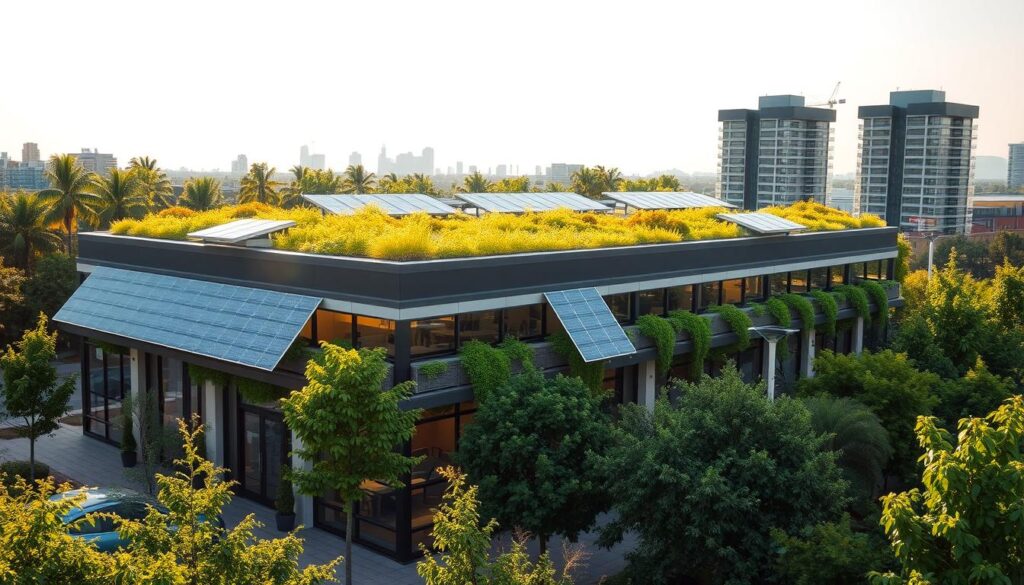
Green Building Certification Costs
Green building certification can lead to long-term benefits. Initial costs might be higher, but green buildings often command higher rents and sale prices.
They also show reductions in energy and water consumption. This contributes to lower long-term operations and maintenance costs.
Technology Integration Expenses
Modern commercial buildings need advanced systems for security, energy management, and connectivity. These tech integration expenses can impact your budget but often improve efficiency and marketability.
A Building Management System (BMS) is now a ‘must have’ feature in many sustainable building projects.
Material Quality Tiers and Pricing
Material choices significantly affect your overall budget. Premium materials might increase initial costs, but can lead to long-term savings.
For example, using hybrid pitch in stadiums can cut irrigation needs by 50%. This could potentially save R78,975 per year.
| Material Quality | Cost Range (per sqm) | Long-term Benefits |
|---|---|---|
| Standard | R7,000 – R10,000 | Basic functionality |
| Premium | R10,000 – R15,000 | Improved durability, energy efficiency |
| Sustainable | R12,000 – R18,000 | Reduced operational costs, higher market value |
Consider these factors to make smart choices about quality and sustainability for your commercial building project. Balance initial costs with long-term benefits to get the best value.
Commercial Building Plan Rates: Conclusion
Careful planning and budgeting are vital for commercial building projects in Johannesburg, Sandton, Centurion, and Pretoria. Fees can vary greatly based on project specifics. It’s crucial to work with experienced professionals who understand the local market.
Location, size, and quality specifications influence business design rates and commercial project costs. Our commercial rate guide provides a starting point. However, each project is unique and requires individual consideration.
Sustainable design options and technology integration may increase upfront costs. Yet, they often offer long-term savings. These factors can help optimise business building fees.
Our analysis highlights the importance of considering all project aspects. This includes initial design, final approval, and everything in between. A comprehensive budget should account for architectural fees, engineering costs, and municipal charges.
We recommend seeking personalised quotes from reputable industry professionals. A detailed quote will help you understand all costs involved. It will also enable you to plan your budget effectively.
With expert guidance and thorough planning, your commercial project can succeed. This applies to projects in Johannesburg, Sandton, Centurion, or Pretoria. Careful consideration of all factors will ensure both financial and structural success.
FAQ
1. How do commercial building plan rates in Johannesburg compare to those in Pretoria?
Commercial building plan rates in Johannesburg are typically higher than in Pretoria. This is due to greater demand and higher property values in Johannesburg. The exact difference varies based on location, size, and property type.
2. What factors influence commercial building plan rates in South Africa?
Location, property size, and building complexity affect commercial building plan rates. Other factors include quality specifications, sustainable design features, and local regulations. Professional service fees also play a significant role in overall rates.
3. Are there additional costs for green building certifications?
Yes, green building certifications like Green Star SA incur extra costs. These include certification fees and consultant charges for sustainability assessments. Higher material and technology costs may be needed to meet certification standards.
However, these investments often lead to long-term savings. Improved energy efficiency and lower operational costs are common benefits.
4. How do size-based pricing structures work for commercial properties?
Size-based pricing structures use a sliding scale for cost per square metre. As the property size increases, the cost per square metre decreases. This is due to economies of scale in design and construction.
However, larger properties may need more complex systems and features. This can impact the overall cost of the project.
5. What are the typical professional service fees associated with commercial building plans?
Professional service fees include architectural, design, and engineering costs. They also cover technical drawing fees, project management, and consultation rates. These fees typically range from 10% to 20% of the total project cost.
6. How do municipal submission and approval charges vary across different areas?
Municipal submission and approval charges differ significantly between municipalities. Cities like Johannesburg and Sandton often have higher fees compared to smaller towns. These charges are based on the property’s size and value.
They may include plan scrutiny fees, building permit fees, and impact fees for larger developments.
7. What’s the difference in cost between standard and premium construction options?
Premium construction options can cost up to 50% more than standard options. This is due to higher-quality materials and more sophisticated design elements. Advanced technology integration and a higher level of craftsmanship also contribute to the cost.
However, premium options often offer better longevity and energy efficiency. They may also provide greater aesthetic appeal.
8. How do technology integration expenses impact commercial building plan rates?
Technology integration can significantly increase commercial building plan rates. Smart building features and advanced security systems add to the overall cost. Energy management technologies and high-speed connectivity infrastructure also raise expenses.
However, these investments can lead to operational efficiencies and cost savings. They can make the property more attractive to potential tenants or buyers.